$125 Million In, by the Commission's Count, Before the Receiver Arrived
Two high-ticket coaching schemes, two federal court orders, one summer — and what the receiver found when the books were finally opened.

A receiver arrives after the court order, and inventories what is left of the intake.
Photo: KATRIN BOLOVTSOVA / PexelsWhat the Commission Alleged
In June 2018, the Federal Trade Commission filed a complaint in the United States District Court for the Middle District of Florida against MOBE Ltd. and a network of affiliated entities operating under the name My Online Business Education. The filing alleged that MOBE had taken in more than $125 million from consumers in the United States since at least 2014, primarily through a tiered system of coaching packages priced from a few hundred dollars to upward of $30,000 per participant. The complaint characterised the operation as a business opportunity scheme that made earnings claims the Commission said were false and unsubstantiated — claims that ordinary participants could expect to earn significant income, claims the FTC said the company's own internal data did not support.
The central mechanism, as the Commission described it, was an ascending ladder of products: a low-cost front-end offer drew in participants, who were then pressured to purchase progressively more expensive tiers — named, at various stages, Silver, Gold, Titanium, Platinum, and Diamond — on the premise that higher tiers unlocked higher commissions. The Commission alleged that the vast majority of participants lost money or earned nothing at all, and that income claims shown in promotional videos and on webinars featured exceptional earners whose results were not representative. Alongside the Maryland complaint, the FTC simultaneously filed a separate action in the Central District of California against Digital Altitude LLC and its founder, alleging a materially similar structure: ascending membership tiers with names including Aspire, Base, Rise, Ascend, Peak and Apex, and a comparable pattern of earnings representations the Commission said were deceptive.
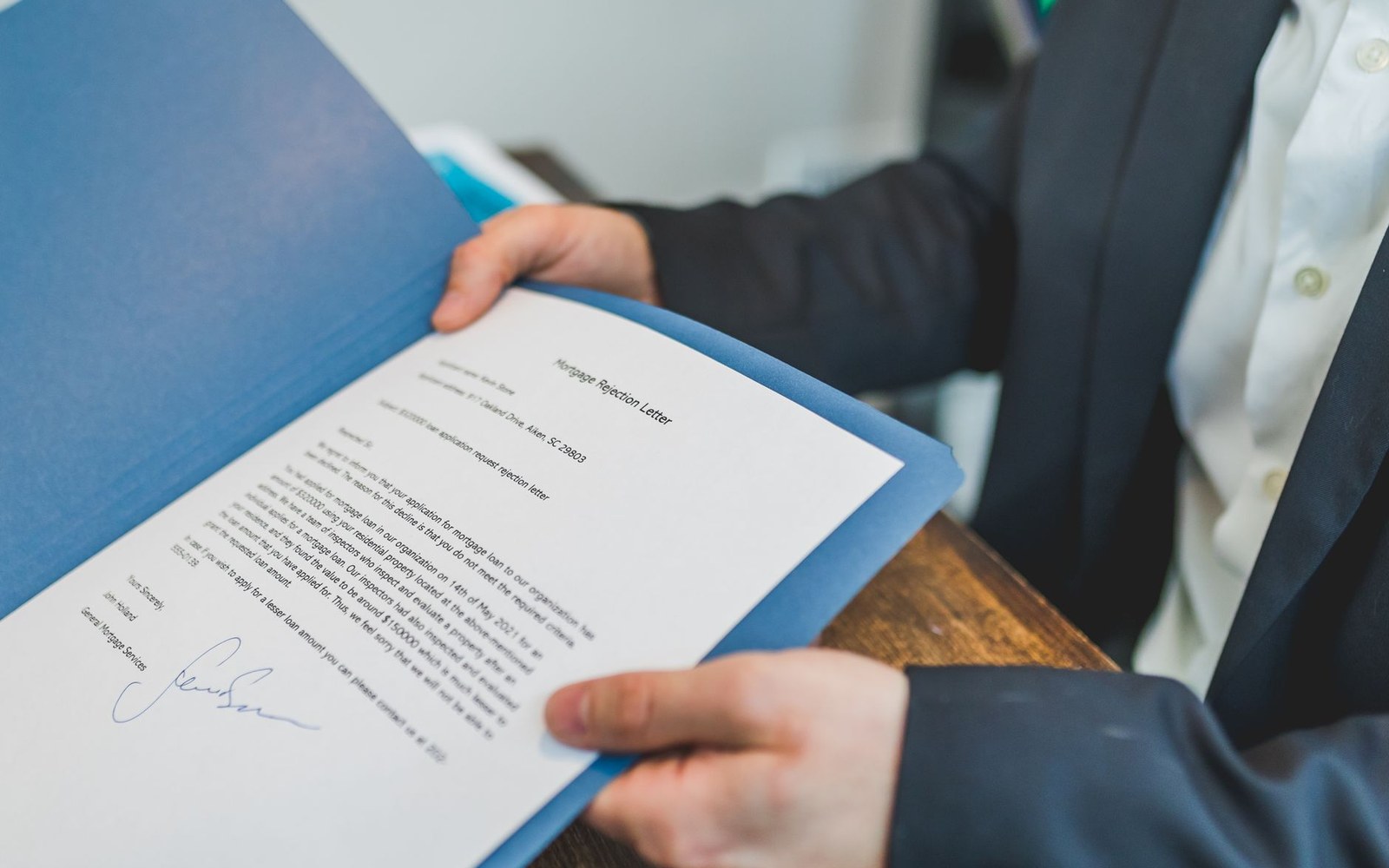
The relief the filing asked for.
Photo: RDNE Stock project / PexelsThe structural parallel between the two cases was not incidental. Both operations shared some of the same affiliates and promotional channels, and both relied on what the Commission described in its filings as a self-referential revenue model — participants earned commissions primarily by recruiting new participants into the same tiered system rather than by selling products or services to outside consumers. That structure placed both operations within the Commission's analytical framework for pyramid schemes, as articulated in prior enforcement actions and in the FTC's Business Opportunity Rule, which requires sellers of business opportunities to provide a standardised disclosure document before any money changes hands.
The Orders and the Freeze
On the day each complaint was filed, the Commission obtained ex parte temporary restraining orders — TROs — from the respective federal courts. An ex parte order issues without prior notice to the defendant; the Commission argued in both cases that advance notice would have enabled asset dissipation. The TROs froze the defendants' assets, prohibited further marketing of the programmes, and appointed receivers — independent officers of the court — with authority to take immediate control of the companies' operations, accounts and records.
| $125 million | gross consumer payments alleged by the FTC in its MOBE complaint, covering activity from at least 2014 through June 2018 |
| MOBE tier prices | ranged from several hundred dollars at entry level to approximately $30,000 at the highest (Diamond) tier, as described in the Commission's complaint |
| Digital Altitude tiers | named Aspire, Base, Rise, Ascend, Peak and Apex in the Commission's filing |
| June 2018 | month in which both TROs were obtained, in the Middle District of Florida (MOBE) and the Central District of California (Digital Altitude) |
| Matthew Lloyd McPhee | named individual defendant in the MOBE proceeding; Australian national operating through entities in Hong Kong, Malaysia and elsewhere |
| Michael Force | named individual defendant in the Digital Altitude proceeding; agreed to permanent injunction as part of stipulated final order |
The MOBE receiver, appointed in the Florida proceeding, found assets spread across multiple jurisdictions. MOBE's principal, an Australian national named Matthew Lloyd McPhee, operated the business through entities registered in Hong Kong, Malaysia and elsewhere; the receiver's reports filed with the court described bank accounts across several countries, real property in Malaysia, and a significant volume of cryptocurrency holdings. The task of marshalling those assets for the benefit of defrauded consumers was complicated by the international structure the receiver documented. The Commission's complaint named McPhee as a defendant individually in addition to the corporate entities, and the court's asset freeze applied to both.
The Digital Altitude TRO, issued by the Central District of California, similarly froze accounts and appointed a receiver over the operation run by Michael Force, a named defendant in the Commission's filing. The Digital Altitude receiver's court filings described a business that had collected fees from participants primarily through recurring membership charges across its tier structure; the receiver's initial accounting identified assets that were substantially smaller relative to the gross receipts the Commission's complaint alleged, a discrepancy consistent with the Commission's characterisation of the operation as one that had been disbursing funds continuously to operators and affiliates throughout its operating period.

A complaint states what the Commission says happened and what it asked the court to order; the two are different documents doing different work.
Photo: Kindel Media / PexelsThe $125 million figure cited in the Commission's MOBE complaint represented gross consumer payments as alleged in the complaint, not a recoverable pool. In enforcement actions of this type, recoverable assets after an asset freeze are typically a fraction of alleged gross receipts, because money spent on operations, affiliate commissions and personal expenditure by principals cannot ordinarily be clawed back from third-party recipients without separate proceedings. The receiver's role was to preserve and liquidate whatever remained within reach of the court's jurisdiction.
What the Record Shows After
Both cases moved toward permanent resolution through consent orders and, in the MOBE proceeding, through contested litigation following McPhee's initial resistance to the Commission's claims. The FTC's eventual settlement in the MOBE matter resulted in a monetary judgment; as is standard in Commission enforcement where defendants lack sufficient assets to satisfy the full judgment, the order imposed a liability figure that exceeded what the receiver had secured — a gap that reflects the structural reality of high-disbursement operations rather than a failure of the enforcement mechanism itself.
- Pre-2018FTC investigation period for both operations
- June 2018simultaneous complaints filed; ex parte TROs obtained; receivers appointed in both cases
- Post-2018receiver administrations proceed; asset marshalling across multiple jurisdictions in MOBE; accounting and distribution proceedings in both matters
- 2021FTC Notice of Penalty Offenses sent to over 1,100 businesses, referencing the analytical framework developed in cases including MOBE and Digital Altitude
The Digital Altitude matter was resolved by a stipulated final order. Michael Force, without admitting the Commission's liability findings, agreed to a permanent injunction barring him from marketing business opportunities and from making earnings claims in connection with any coaching or educational product. The monetary judgment in that order was similarly subject to partial suspension based on demonstrated inability to pay the full amount — a provision the Commission uses when the receiver's accounting establishes that assets are insufficient to satisfy the liability.
For consumers who filed claims through the receiver process, the distribution amounts were modest. Receiver proceedings in FTC enforcement actions are public; filings with the relevant district courts show the costs of administration — receiver fees, legal costs, forensic accounting — are paid from the frozen estate before any distribution to harmed consumers, further reducing what reaches individual claimants. The Commission has published information about the MOBE and Digital Altitude cases including the relevant court documents and complaint filings.
The two cases were among the more substantial business-opportunity enforcement actions of the Commission's 2018 calendar, preceded by years of investigation and followed by multi-year receivership administration. They illustrate a recurring pattern in high-ticket coaching enforcement: the gross-receipts figure cited in a Commission complaint describes what moved through the scheme, not what a receiver will find on the other side of a TRO. The gap between those two numbers is, in most cases, the bulk of the story — and it almost never appears in the headline.
The 2021 Notice of Penalty Offenses the Commission issued to over a thousand companies, putting them on formal notice of liability for deceptive earnings claims, drew in part on the analytical groundwork laid by cases like MOBE and Digital Altitude — instances where the Commission had demonstrated before a federal court that implied promises of business-opportunity income could constitute actionable deception under Section 5 of the FTC Act. That notice, addressed to over a thousand recipients across the online marketing sector, marked the Commission's attempt to extend deterrence beyond individual enforcement actions to the broader ecosystem those actions had documented.
Every rate and figure on this page is attributed to the document that published it. The sources cited above:
- ftc.gov
The court that issued the order.
Photo: Mark Stebnicki / Pexels